
Last updated October 15, 2026
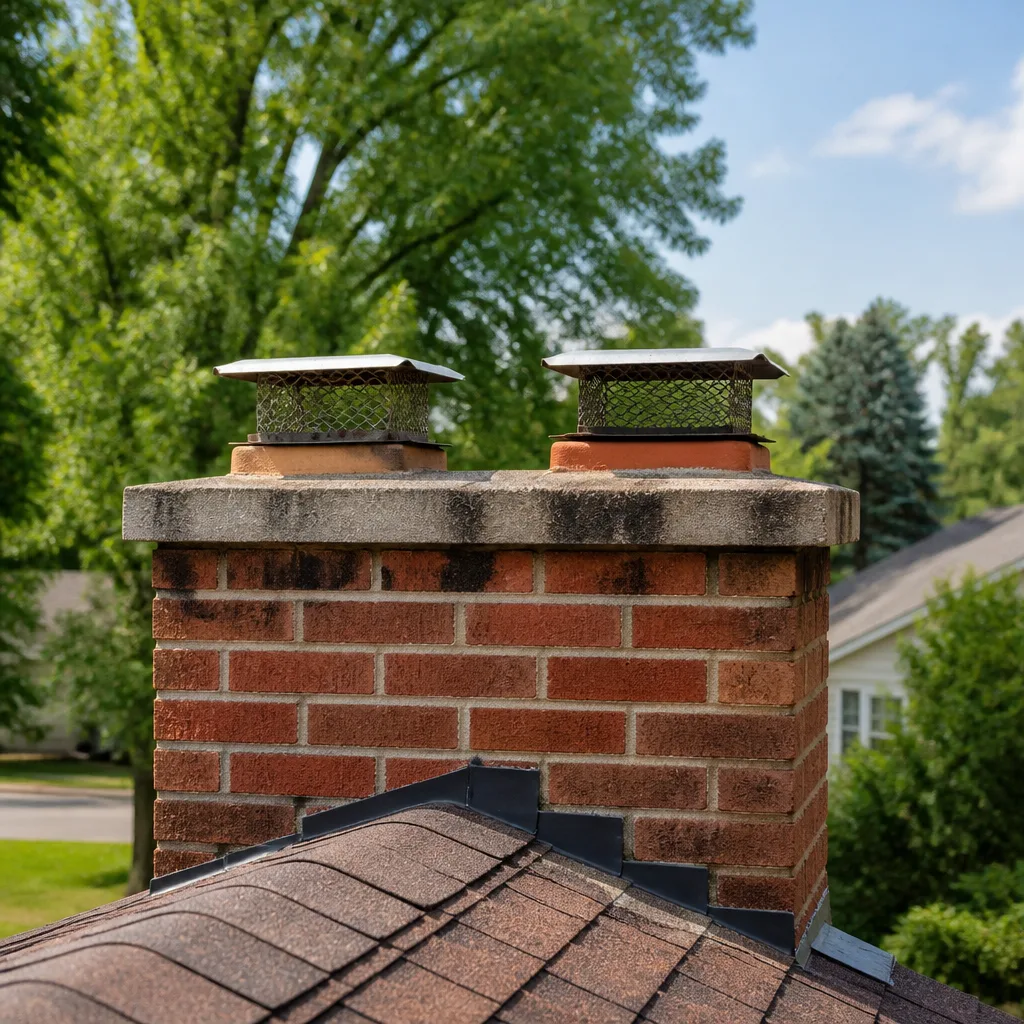 Sweep & inspection
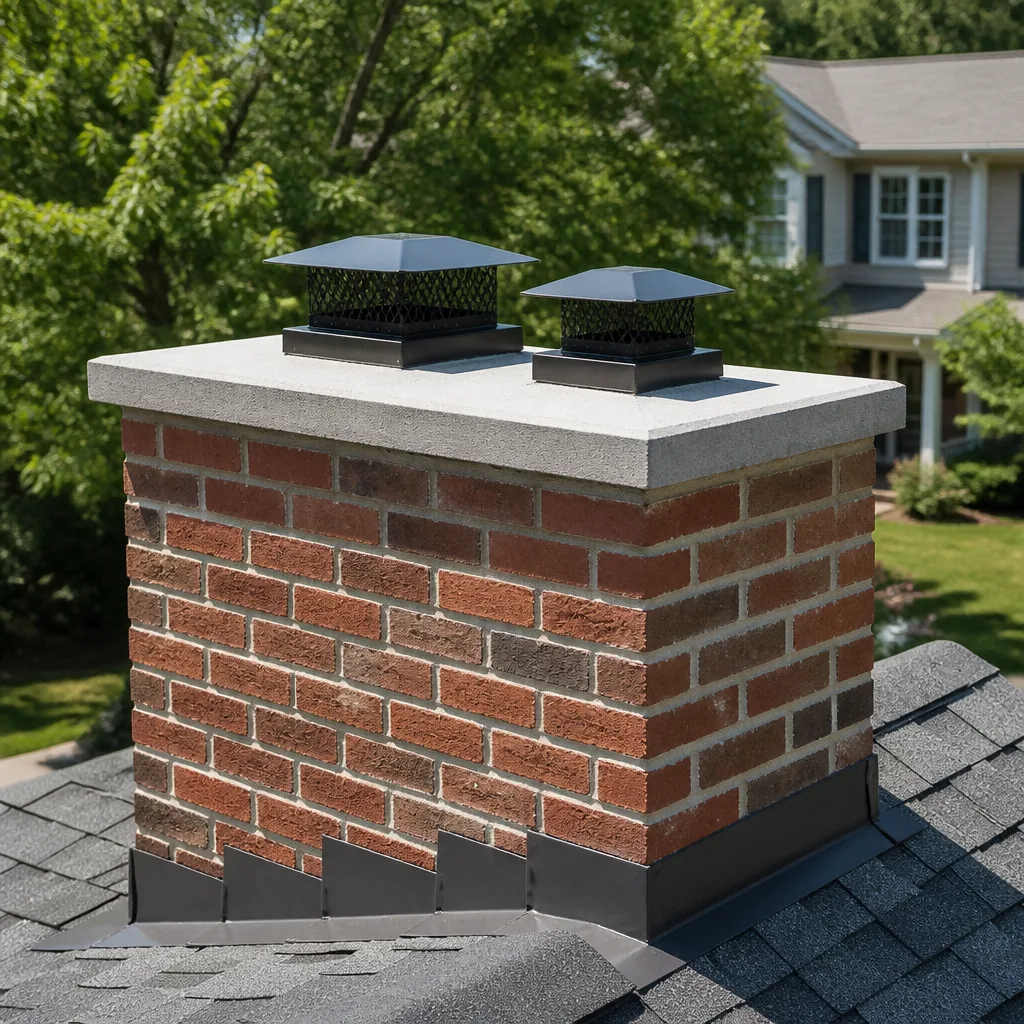 Caps & crowns
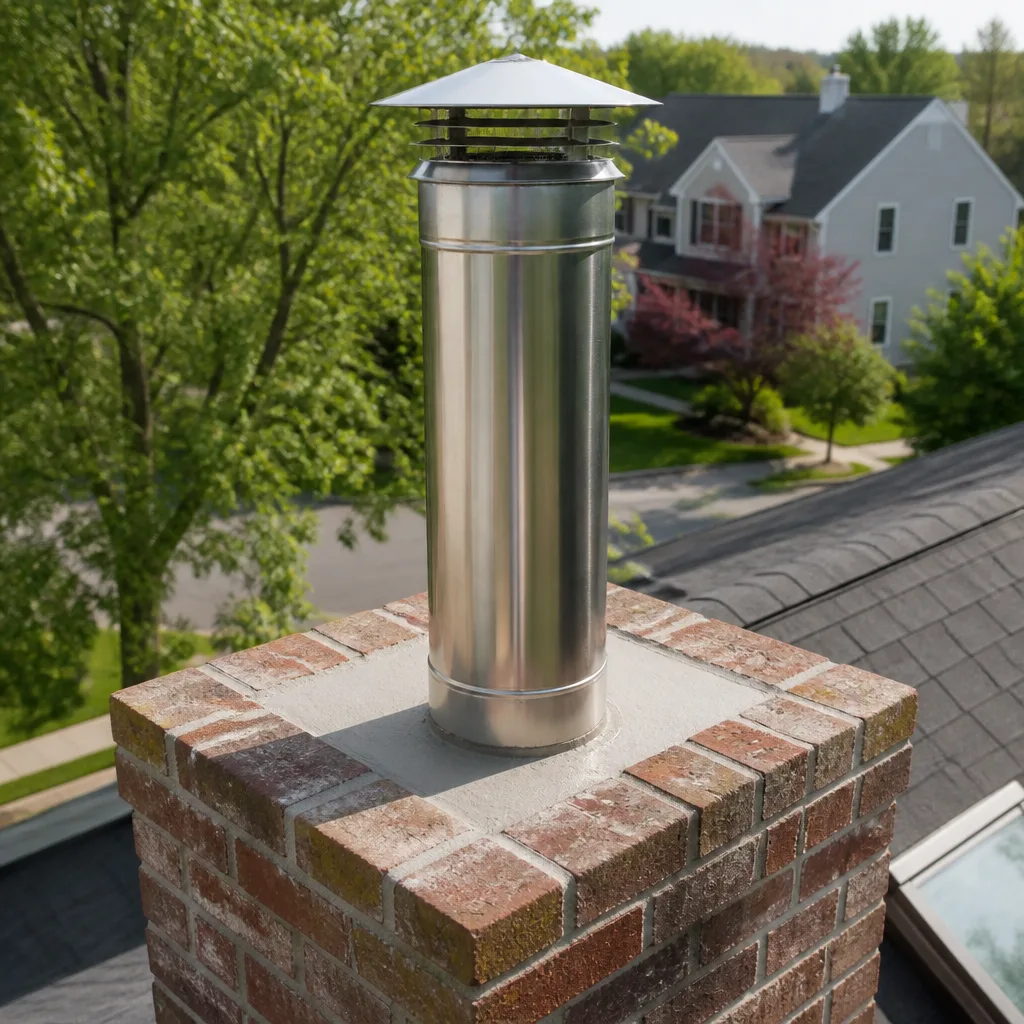 Flue relining
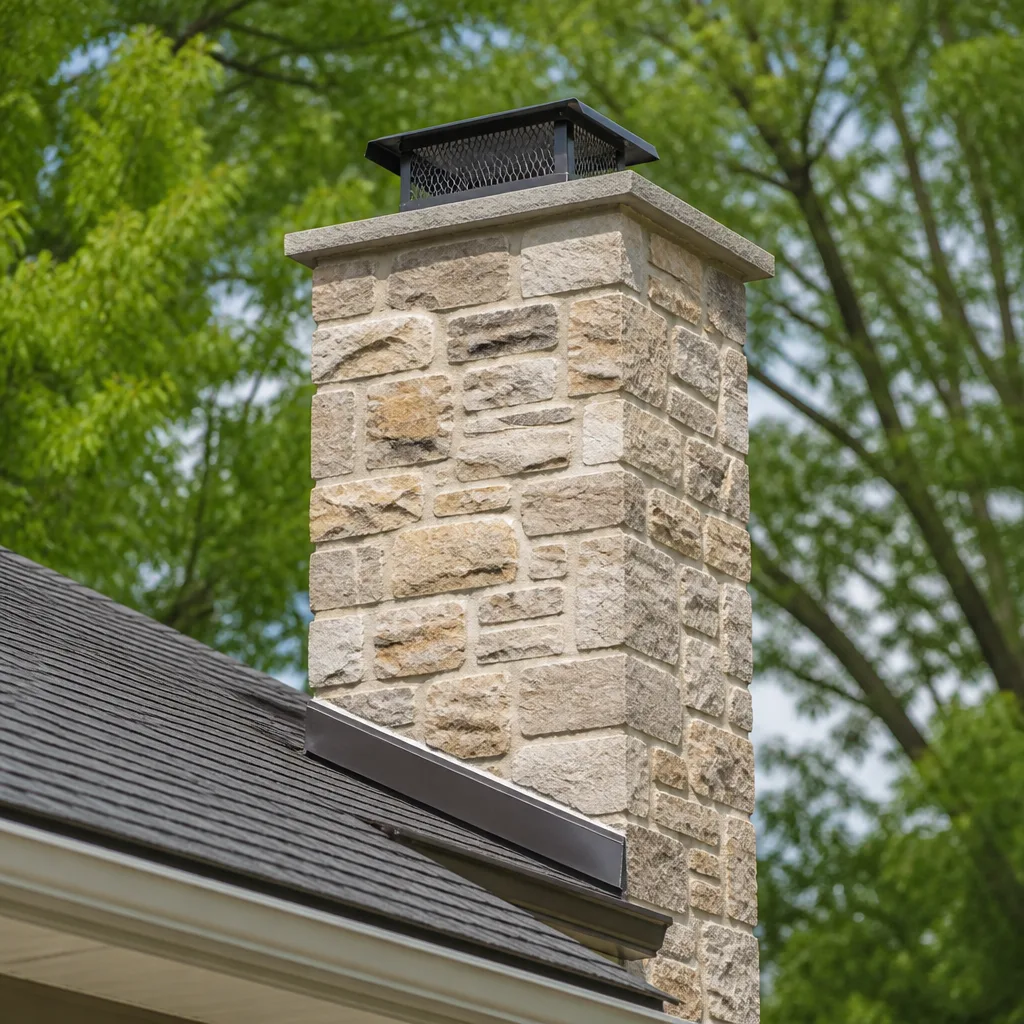 Masonry repair
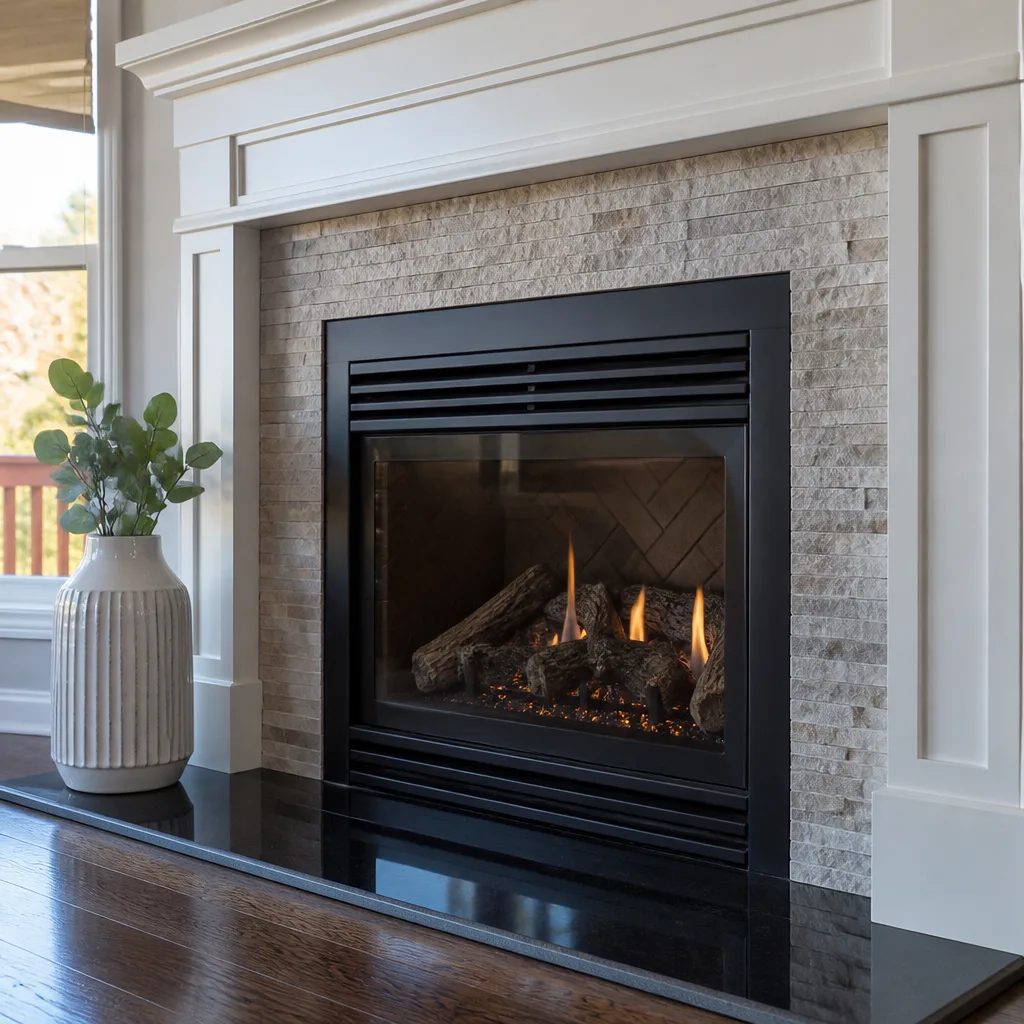 Gas fireplace service
Level 1 sweep and inspection to the NFPA 211 annual standard - flue, crown, cap, and flashing checked and photographed
Chimney sweep logs do not sweep chimneys. They loosen some creosote - which then falls where a brush and vacuum still have to collect it.
Seasonal Chimney Cleaning Care for Miami: Year-Round Homeowner’s Guide
October is the most important chimney month in Miami. Not because you’re about to light your first fire of the season, though that’s part of it. It’s because October is the first real chance to assess what six months of tropical weather did to your chimney while you weren’t looking. Most chimney guides are written for the Northeast, where the calendar moves freeze, thaw, burn, repeat. Miami doesn’t work that way. We have two seasons that matter for chimneys: hurricane season, which punishes them from the outside, and fireplace season, which stresses them from the inside. This guide is built around those two realities. You’ll learn exactly what to check in October before the first fire, what a January mid-season inspection catches, how to close your chimney down properly in April, and what to do the day after a named storm passes over your roof.
Styles & brands we work with
Quick Answer
Seasonal chimney care in Miami means scheduling a sweep and inspection every October before fireplace season starts, doing a visual mid-season check in January, and properly closing the chimney in April before humidity season sets in. After any named storm, check the chimney cap, crown, and flashing within 48 hours. A standard chimney sweep in Miami runs between $189 and $329 depending on the chimney’s condition and when it was last cleaned.
Table of Contents
- Why Miami Has Two Chimney Seasons, Not Four
- The October Pre-Season Checklist: Before the First Fire
- After a Named Storm: The 48-Hour Chimney Protocol
- Mid-Season Maintenance: What January Catches That October Misses
- Shoulder Months and Condensation: The Liner Damage Nobody Talks About
- Post-Season Closing: April Steps for Eight Months of Humidity
- Summer and Hurricane Season: Maintenance While the Fireplace Sleeps
- Common Mistakes to Avoid
- When to Call a Professional
- Frequently Asked Questions
- The Bottom Line
Why Miami Has Two Chimney Seasons, Not Four
Chimney maintenance guides written for northern states organize the year around freeze-thaw cycles, burning season, and spring shutdowns. That structure barely applies in Miami. We don’t get snow. We don’t get ice dams. What we get is relentless humidity, salt air near the coast, and a six-month hurricane season that subjects every exterior chimney component to wind-driven rain and debris impact. Then, for roughly four months between November and February, those same chimneys get used. The firebox goes from ambient 85 degrees to over 1,000 degrees in under an hour. That thermal shock reveals problems that moisture had been quietly setting up for months.
So the practical Miami chimney calendar has two seasons: the wet season, roughly May through October, when the chimney is attacked from the outside, and fire season, November through February, when it’s stressed from the inside. March and April are the transition months. What you do in those two shoulder months determines whether the next hurricane season treats you well or badly.
We’ve inspected chimneys in Coral Gables, Kendall, and Pinecrest that looked fine on the outside in August and had visible spalling brick and cracked crown joints by October. That’s not because August was worse. It’s because the damage accumulated silently through every afternoon thunderstorm and tropical system, then became obvious once someone actually looked closely. If you only think about your chimney when you’re about to light a fire, you’re always eight months behind the problem.
This guide follows the Miami calendar: October prep, January check, April closing, and storm-season readiness. If you follow it, you’ll never find yourself standing in front of a cold fireplace in December wondering whether that smell is normal. More on our full service range at the Ashby Chimney Miami home page.
The October Pre-Season Checklist: Before the First Fire
The first week of October is the single most important maintenance window of the year for a Miami chimney. Here’s why: whatever the wet season did to your chimney, you want to know about it before you put a live fire inside. A hairline crack in the flue liner (the clay or steel tube that vents combustion gases out of your home) doesn’t announce itself. It just sits there while you burn, letting heat and carbon monoxide seep into places they shouldn’t go. A damaged chimney cap lets rain in all summer; the first fire bakes that moisture out, and sometimes that’s fine and sometimes it’s not.
Here is the step-by-step October checklist we walk through on every seasonal maintenance visit in Miami:
- Visual exterior inspection. Look at the chimney from the ground and, if safe, from the roof. Check for missing or cracked mortar joints, spalling brick (brick faces flaking off), and vegetation growing out of the masonry. In Miami, ficus roots and air plants find their way into mortar cracks faster than you’d believe.
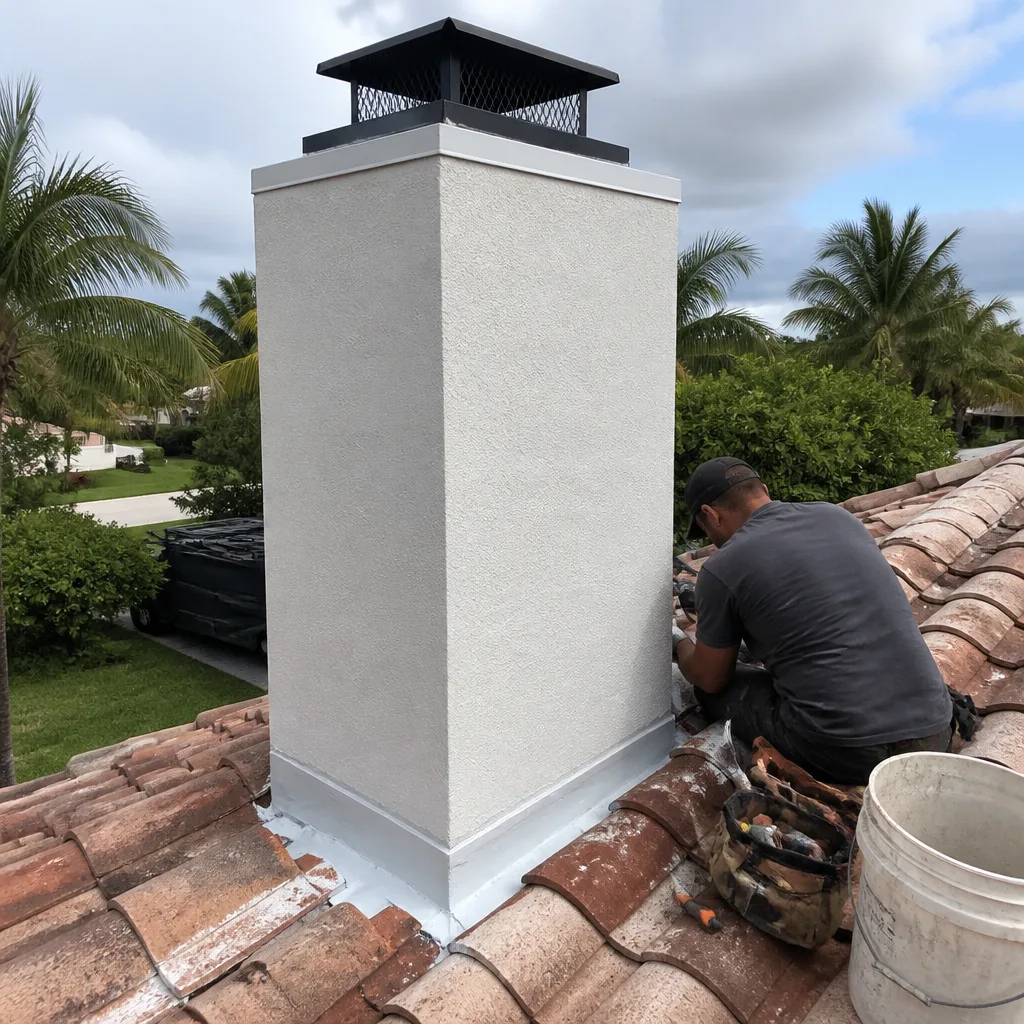
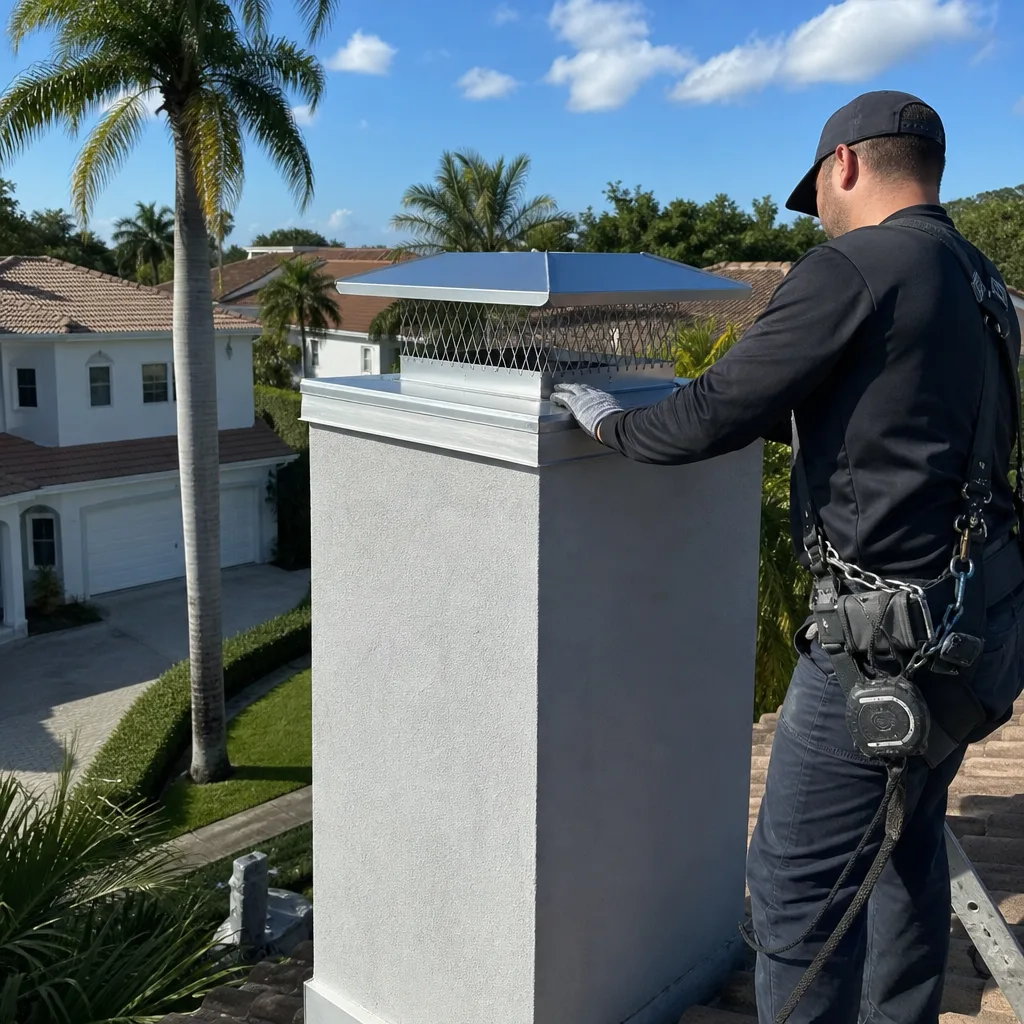
- Chimney cap check. Confirm the cap is present, seated properly, and the mesh sides aren’t clogged with leaves or nesting material. A missing cap is the number one cause of water damage we see in Miami chimneys. It also invites birds, squirrels, and the occasional rat snake.
- Crown inspection. The crown is the concrete slab that caps the top of the chimney. Look for hairline cracks or a crown that’s been worn down by years of storms. Even small cracks let water work into the chimney structure, and in Miami’s humidity that water barely dries.
- Flashing check. The flashing is the metal that seals the seam where the chimney meets the roof. Check for lifted edges, missing sealant, or rust. Leaking flashing is more common in Miami than almost any other chimney problem, because our roofs take such a beating.
- Flue inspection. This is the part you can’t do from the ground. A proper flue inspection means a camera run down the liner to look for cracks, gaps, or creosote buildup. Creosote is the tar-like residue from wood smoke that accumulates on flue walls. In humid Miami air, creosote absorbs moisture and becomes more corrosive than it would in a dry climate. If your flue hasn’t been inspected in two years or more, October is the time.
- Firebox and damper check. The damper needs to open, close, and seal properly. A damper that’s stuck open lets cooled air-conditioned air escape all summer; a damper that’s stuck closed makes a fire impossible. Check the firebox floor and walls for cracked firebrick.
- Test burn. Once everything above checks out, light a small fire with dry, seasoned wood. Watch for smoke backing into the room, odd smells, or a fire that won’t draw. Any of those means something is still wrong.
Most Chimney Sweep in Miami calls we book in October combine a sweep and a Level 2 inspection, because after six months of storms it’s the only way to know the chimney is actually safe to burn. If you’re comfortable doing steps 1 through 4 yourself, great, but steps 5 and 6 require equipment and a trained eye. And the test burn in step 7 is where problems become obvious fast.
After a Named Storm: The 48-Hour Chimney Protocol
Standard hurricane prep guides tell you to board windows, secure loose items, and stock water. They don’t mention chimneys. That’s a real gap, because a chimney is a vertical masonry or framed structure standing alone on your roof, taking the full force of wind-driven rain for hours. After a storm passes over your home in Miami, here’s what to check within 48 hours:
- Cap displacement. Wind gusts over 90 mph can lift a chimney cap clean off or shift it so the mesh no longer covers the flue opening. Missing cap means rain pours directly down the flue, and the next tropical system turns that into standing water inside your firebox.
- Flashing separation. Storm winds flex the roof deck. That movement can break the sealant on flashing or lift the metal edges. You may not see it from the ground, but you’ll see the water stain on the ceiling near the fireplace in the weeks after.
- Crown damage. Flying debris during a hurricane is the leading cause of cracked crowns. A palm frond hitting at 100 mph has enough force to chip concrete. Check for fresh cracks and missing sections.
- Water intrusion signs. Inside the house, look for dampness around the fireplace, water stains on the ceiling near the chimney chase, or a musty smell in the firebox. Any of these means water got in somewhere and is wicking through the masonry.
- Debris in the flue. If the cap was damaged, debris from the storm (leaves, branches, sometimes roof shingles) may be inside the flue. Do not light a fire until this is cleared. Blocked flues cause smoke and carbon monoxide to back up into the house.
After Hurricane Irma in 2017, we saw an enormous spike in Miami chimney cap replacements. Chimneys that had survived a decade of normal storms suddenly had caps peeled off like can lids. Many homeowners didn’t realize it until they lit the first fire in December and got a face full of smoke. If a named storm passes over your house, take ten minutes and run this checklist. If anything looks off, have a professional take a closer look before the next burn.
We recommend a Level 2 camera inspection after any storm where sustained winds passed 75 mph at your address. A Chimney Inspection in Miami is the quickest way to confirm the chimney is still sound, because it looks inside the flue where visible damage often isn’t visible from the ground.
Mid-Season Maintenance: What January Catches That October Misses
You did the October prep, the chimney checked out, and you’ve been burning fires on the cooler nights since November. Then January arrives and you figure the chimney is fine because it was fine three months ago. That’s a reasonable assumption, and it’s also wrong in ways that matter.
A mid-season check in January catches problems that an October inspection cannot see, because those problems didn’t exist in October. Here’s what changes during the first two months of burning:
- Creosote accumulation rate. Even a well-burning fireplace produces creosote. How fast it builds depends on wood moisture, fire temperature, and draft. A chimney that had 1/8 inch of creosote in October might have a full 1/4 inch by mid-January. That’s the threshold where we tell homeowners to schedule a sweep rather than wait for spring. In Miami’s climate, humid air drawn down the flue between fires makes creosote sticky and more likely to trap additional particles.
- Damper wear. Damper cables and hinges that worked fine in October can seize or break after months of repeated use and exposure to fire heat. A damper that won’t fully close means your air-conditioned air escapes all winter.
- New cracks from thermal cycling. This is the big one. The firebox lining expands when it’s hot and contracts when it cools. That’s normal. But if there’s a weak point in a firebrick or a mortar joint, repeated cycling through November and December turns a hairline crack into a visible gap. By January, you can see it. In October, you couldn’t.
- Smoke and odor changes. If the fire suddenly starts smoking more than it did in November, or there’s a new smell you can’t place, something changed inside the flue. It might be an animal nest (squirrels, birds, and rats all look for warm chimney spaces in January), damaged cap mesh, or creosote building up in a spot that restricts draft.
Mid-January is also the right time to assess whether your firewood is any good. Miami doesn’t have the same firewood culture as colder states. A lot of what’s sold at gas stations and grocery stores is green, meaning it was cut recently and hasn’t been seasoned. Green wood hisses and smokes and produces creosote at three to four times the rate of properly seasoned wood. If your January fire looks smoky and produces little heat, the wood is likely the problem, and it’s also making your chimney dirtier much faster.
A January inspection is a quick visual and camera check, not a full sweep. If everything looks fine and creosote is under the 1/4 inch mark, you’re good to keep burning through February. If not, a sweep is the right call. We do mid-season checks throughout Miami from Kendall to Aventura, and the majority don’t turn up anything serious, but when they do, catching it in January is always cheaper than catching it at the start of next October.
Shoulder Months and Condensation: The Liner Damage Nobody Talks About
October, November, and March are Miami’s shoulder months. They’re the weird in-between weeks when it’s not quite burning weather and not quite full humidity season. Those conditions create something inside your flue that most guides don’t mention: condensation.
Here’s how it works. During the day, the air inside your chimney is warm and humid. At night, the temperature drops enough that the air cools and water vapor condenses on the flue liner walls. On a clay tile liner, that water absorbs into the porous surface. Then the next day’s heat drives it partway out. That repeated wetting and drying cycle slowly breaks down the tile surface. Over years, it creates hairline cracks that widen, and eventually the liner loses its ability to contain combustion gases. A cracked flue liner lets carbon monoxide migrate into the home and can allow heat to reach combustible framing materials around the chimney chase.
What makes Miami’s condensation problem worse than northern states is that it happens with higher ambient humidity. In Vermont, shoulder-season condensation is mostly about temperature swings. In Miami, the air is already at 70 to 80 percent humidity before you factor in the temperature. The condensation point arrives faster and the moisture content is higher. We see accelerated liner deterioration in Miami chimneys compared to what our counterparts in drier climates report for the same age of chimney. For more on how we inspect for this, see our Fireplace Repair in Miami page, where liner evaluation is a core part of the service.
There’s no way to completely stop shoulder-month condensation. It’s physics. But you can reduce the impact. A properly sealed damper when the fireplace is not in use prevents indoor air from circulating through the flue and carrying additional moisture. A chimney cap with a full-width rain hood minimizes the amount of ambient humidity entering from the top. And if you have an older clay tile liner and you’re in a home that’s 30 or more years old, having the liner camera-inspected in October is the single best way to know whether condensation damage has already started. The repair is a fraction of the cost before a crack becomes a structural problem.
Post-Season Closing: April Steps for Eight Months of Humidity
Most Miami homeowners stop burning fires by late February or early March. The urge for a fire disappears fast once temperatures climb back to the 80s. But the transition from active fireplace to dormant fireplace is not automatic. What you do between late March and mid-April determines how well the chimney survives the next eight months.
Here’s the closeout sequence we recommend for every Miami chimney:
- Schedule the post-season sweep. Get the last burn season’s creosote out of the flue before you close the damper. The reason is simple: creosote is hygroscopic, meaning it absorbs moisture from humid air. Sitting all summer in a closed chimney, a creosote-coated flue is absorbing water from air that’s already saturated. Wet creosote releases acids that eat into masonry and metal liners. A clean flue has nothing to corrode. This is the most important post-season step, and it’s the one most Miami homeowners skip.
- Close the damper and check the seal. The damper should be closed tight, not just mostly closed. A gap as small as 1/8 inch around the damper lets humid outdoor air circulate through the flue for eight months. That’s an open invitation for rust, mold, and that sour smell some homeowners notice in September when they first open the fireplace again.
- Check the cap and crown one more time. You’re about to send the chimney into hurricane season. The cap and crown are the only things standing between your flue and six months of heavy rain. If the cap mesh is rusty or the crown has new cracks, April is the time to fix them, not August when everyone is scrambling ahead of the next storm.
- Optional but smart: install a top-sealing damper. A top-sealing damper mounts at the top of the flue and seals the entire flue opening with a rubber gasket, far better than a standard throat damper. For a Miami chimney that sits closed from April through November, a top-sealing damper dramatically reduces the amount of humid air and rain that enters the flue during the off-season. It also keeps insects and small animals out. Many of our Miami customers who install them report noticeably less musty smell in the fireplace by the time October rolls back around.
- Make note of anything you noticed during the last burn season. A strange smell, a smoke puff, a fire that was hard to light, a draft you felt on windy days. Write it down now, because in October you won’t remember the details. Bring that note with you when you book the pre-season inspection.
Closing a Miami chimney properly is not a complicated job. It’s about a clean flue, a sealed damper, and intact top-of-chimney components. Skip any one of those and you’re inviting eight months of tropical weather to do its worst while you’re not looking.
Summer and Hurricane Season: Maintenance While the Fireplace Sleeps
June through September is the longest stretch in the Miami chimney calendar and the one most homeowners ignore entirely. The fireplace is dormant. There’s no fire, no smoke, no reason to think about the chimney at all. That’s the mistake. The wet season is exactly when the chimney needs attention, because it’s when the damage happens.
The two most damaging forces at work during a Miami summer are wind-driven rain and ultraviolet exposure. Rain, especially in afternoon thunderstorms and tropical systems, hits the chimney from all angles. If the crown has even a small crack, water works into the mortar joints. The UV exposure from months of direct sun degrades the sealant on flashing and breaks down the surface of the crown over time. Both are slow, cumulative processes. You won’t notice them in July, but by October the evidence is there.
Here’s a simple summer maintenance rhythm for Miami homeowners:
- One visual check per month from the ground. Look up at the chimney with binoculars or a phone camera. Check that the cap is still seated and the crown looks intact. If something looks off, it’s easier to schedule a repair in July than in October.
- After heavy storms, check the ceiling near the chimney. Water stains on the ceiling or walls near the fireplace are the earliest sign of flashing failure. The sooner you catch it, the smaller the repair.
- Keep the damper closed. It should stay shut all summer. An open damper in July means your air conditioning is literally escaping through the roof, while humid air gets pulled down the flue. Your AC runs harder and your chimney fills with damp air. That’s a lose-lose.
- If a named storm is forecast, do a quick cap check. Make sure the cap is secured before the winds arrive. If it’s loose, a pre-storm repair is cheaper and safer than dealing with a missing cap after the fact.
Summer is also the best time to schedule chimney work that’s not urgent. If you need a new liner, a crown rebuild, or a fireplace repair, getting it done during the slow season means shorter wait times and more flexible scheduling. By October, every chimney company in Miami is backed up. In July, we can usually get to a job within a week. The Chimney Sweep in Miami team stays busy year-round, but the off-season is unquestionably the easiest time to schedule non-emergency work.
Common Mistakes to Avoid
Some mistakes we see in Miami chimneys happen because homeowners don’t know any better. Others happen because well-meaning DIY advice from the internet was written for a completely different climate. Here are the most frequent ones and why they matter:
- Treating October like just another month. The single most common mistake is thinking you can handle the pre-season check in December when you actually want a fire. By then, the damage from the wet season has been sitting for two extra months, and repair slots are harder to find. October is the right month, every year.
- Skipping the post-season sweep entirely. “I’ll clean it next fall” is the most expensive sentence in chimney maintenance. Eight months of creosote sitting in Miami humidity creates a flue that’s more corroded and harder to clean than one that was swept in April. The post-season sweep is the single best dollar-for-dollar investment in chimney longevity.
- Assuming a cap is a cap. Not all chimney caps are equal. A cheap galvanized cap from a hardware store will rust through in two or three Miami summers. A stainless steel or copper cap costs more upfront but lasts decades. If your cap needs replacing, spend the money once.
- Burning green or wet wood. Miami’s firewood market is full of unseasoned wood sold at convenience stores and supermarkets. Burning it produces excessive creosote and smoky fires. Buy your wood from a firewood supplier who can tell you when it was split, and look for wood with visible cracks in the ends and a hollow sound when knocked together. That’s seasoned wood.
- Caulking cracks instead of repairing them. When a homeowner sees a crack in the crown or a gap in the flashing, the instinct is to squeeze some caulk in there. Caulk fails within a season in Miami’s heat and rain. A proper repair means removing the damaged material and redoing it. It costs more, and it lasts.
- Ignoring the chimney after a storm because the house “looked fine.” The roof may have kept its shingles and the windows may have held. That doesn’t mean the chimney cap did. The chimney is the most exposed single component of the house in a hurricane, and it fails more often than any other part. Check it every time.
- Falling for the “chimney sweep is a $79 add-on” special. In Miami, some handyman services and pressure-washing companies will offer a chimney sweep for an absurdly low price and then find “problems” that require thousands in repairs. A real chimney sweep uses specialized brushes and vacuum equipment and takes an hour or more. If the price is $79, you’re not hiring a chimney sweep. You’re hiring a sales pitch with a brush attached.
When to Call a Professional
Some chimney work is genuinely DIY-friendly. You can check the cap from the ground with binoculars, inspect the firebox with a flashlight, and monitor the ceiling after storms. But some conditions require a trained eye and professional equipment. Call a chimney professional if you see any of the following: visible cracks in the flue liner or masonry, water stains on the ceiling or walls near the fireplace, smoke backing into the room during fires, a strong unpleasant odor from the fireplace during humid months, or animal sounds coming from the chimney. Also call if the chimney has not been swept in three or more years, regardless of how little it’s been used. In Miami’s climate, even a dormant chimney accumulates debris and moisture damage. If any of this sounds familiar, Chimney Inspection in Miami is the right place to start. Ashby Chimney Miami offers free estimates in Miami. Call (850) 787-8597 and we’ll take a look. Written price before any work starts, always.
Frequently Asked Questions
Most chimney sweeps in Miami run between $189 and $329, depending on the chimney’s condition, the amount of creosote buildup, and how long it’s been since the last cleaning. If the flue is heavily built up with creosote or hasn’t been cleaned in years, the sweep takes longer and costs more. Every job we book at Ashby Chimney Miami gets a written price before any work starts, so the number on the invoice matches the number we quoted. Call (850) 787-8597 for an exact quote. Estimates are free.
Once a year, at minimum, even if you only use the fireplace a handful of times. Miami’s humidity changes the math. Creosote that sits in a flue through eight months of humid weather becomes corrosive and harder to remove. The annual sweep is best scheduled in October before the first fire, or in April right after the last one. If you burn fires more than once a week during the season, you may need a mid-season sweep in January as well.
Not always. A cracked flue liner is a genuine safety issue, but you should never take that diagnosis on faith. Ask to see the camera footage of the damaged liner. Any reputable chimney company runs a camera up the flue during an inspection and will show you exactly what they’re seeing. At Ashby Chimney Miami, we don’t recommend a liner replacement without camera evidence you can see for yourself, and if the liner can safely wait another season, we’ll say that plainly. When a liner repair is needed, we use materials from established chimney-trade suppliers like Olympia Chimney and Gelco, and the repair is covered by our written guarantee.
Creosote accumulates on the flue walls. In Miami, it absorbs humidity and becomes a sticky, acidic paste that corrodes the liner and restricts the draft. A restricted draft means smoke backs up into the room and carbon monoxide doesn’t vent properly. A heavily built-up flue is also a fire risk, because creosote is combustible. The most common real-world outcome we see in Miami after several years of neglect is a smokey fireplace, a corrosion-damaged liner, and a repair bill that would have been prevented by a $189 sweep. The cheaper path is the annual visit.
That smell is humid air sitting inside the flue and firebox, mixed with creosote residue and whatever dust and organic matter has accumulated. A properly closed damper reduces it but doesn’t eliminate it entirely in Miami’s humidity. A post-season sweep in April removes the creosote that’s absorbing the moisture. A top-sealing damper goes further by sealing the flue completely at the top. If you notice the smell every summer, the fix is usually a sweep plus a better damper seal.
Within 48 hours, check the cap to confirm it’s still seated, check the crown for fresh cracks, check the flashing for lifted edges, and look inside the house for water stains on the ceiling near the chimney. If the cap is missing or damaged, don’t use the fireplace until it’s replaced. If you see anything concerning, call (850) 787-8597 for a professional inspection before the next burn season. Free estimates.
The Bottom Line
Miami’s chimney calendar has two seasons: storm season, which attacks from the outside, and fire season, which stresses from the inside. The homes that stay safe and avoid surprise repair bills are the ones that respect both seasons. October is the critical month for pre-season inspection and sweep. January is the mid-season checkpoint. April is the post-season closeout, and the hurricane months are when small problems become big ones if left unattended. A chimney that gets an annual sweep, a post-storm check after named storms, and a proper April closing will serve a Miami home for decades. Skip those steps and you’ll pay for it eventually, usually at the worst possible time.
If you’re behind on your chimney maintenance, or you just want a professional to take a look before the next fire season, Fireplace Repair in Miami and chimney sweep services are what we do. Ashby Chimney Miami has been serving Miami homeowners since 2002 under the Kingswell Guarantee: say the price upfront, show up in the window, leave it cleaner, put the guarantee in writing, and come back if it fails. Call (850) 787-8597 and talk to a live person, 24/7.
Written by Nathan Corliss, Owner at Ashby Chimney Miami, serving Miami since 2002.
See the difference
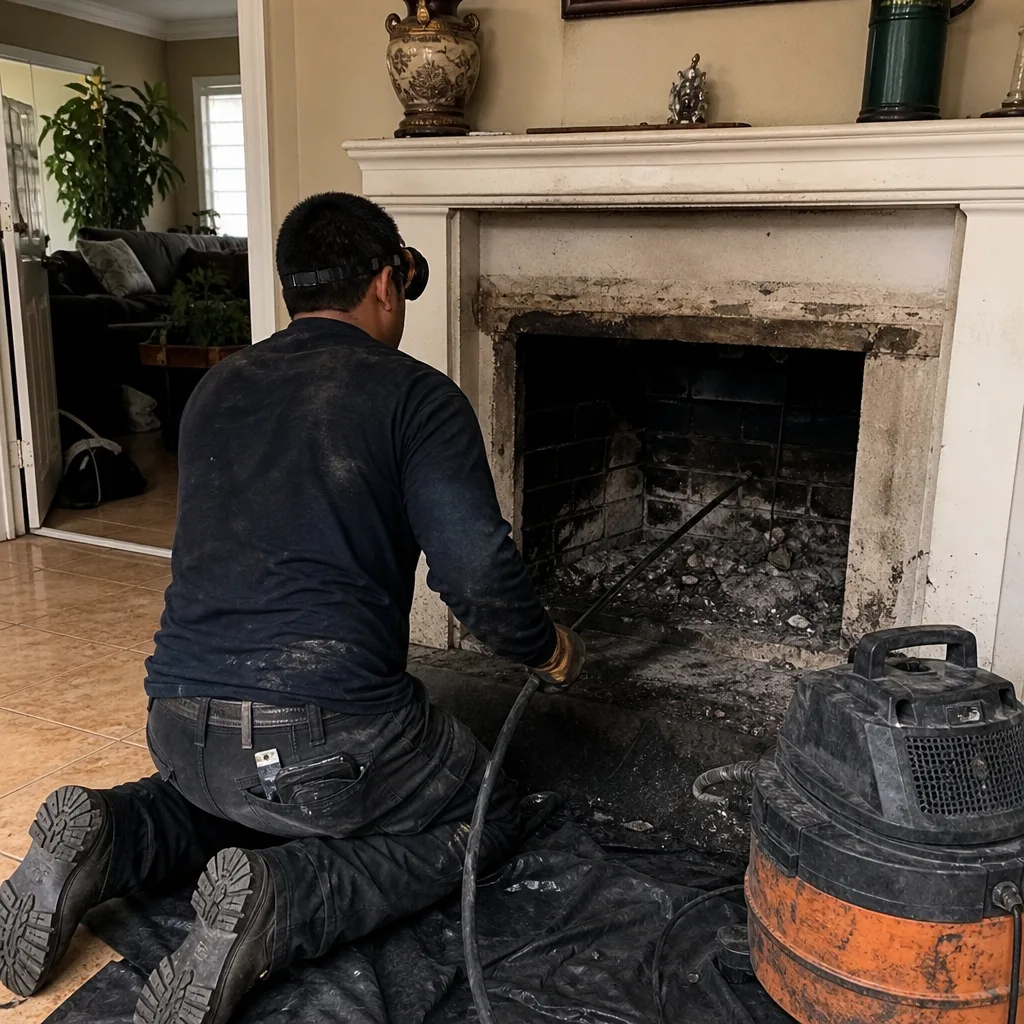 Before
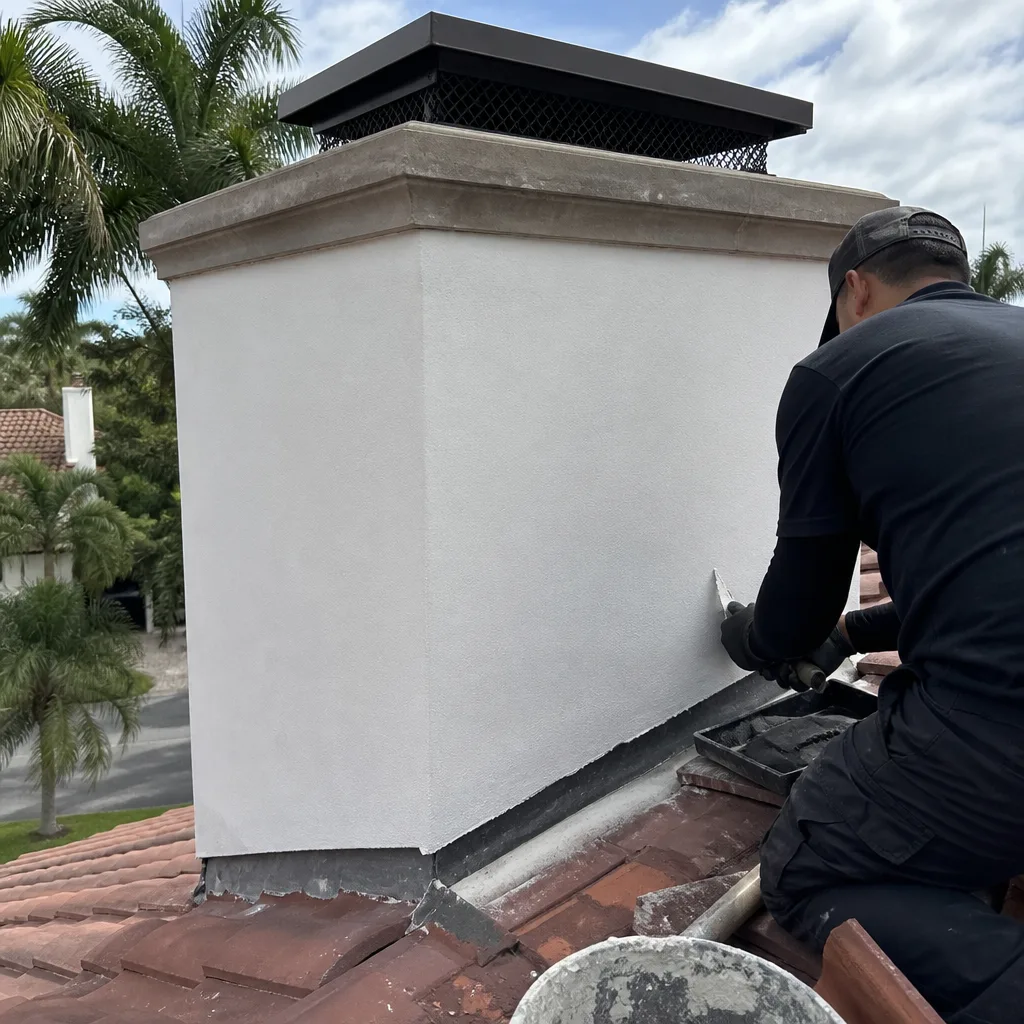 After
After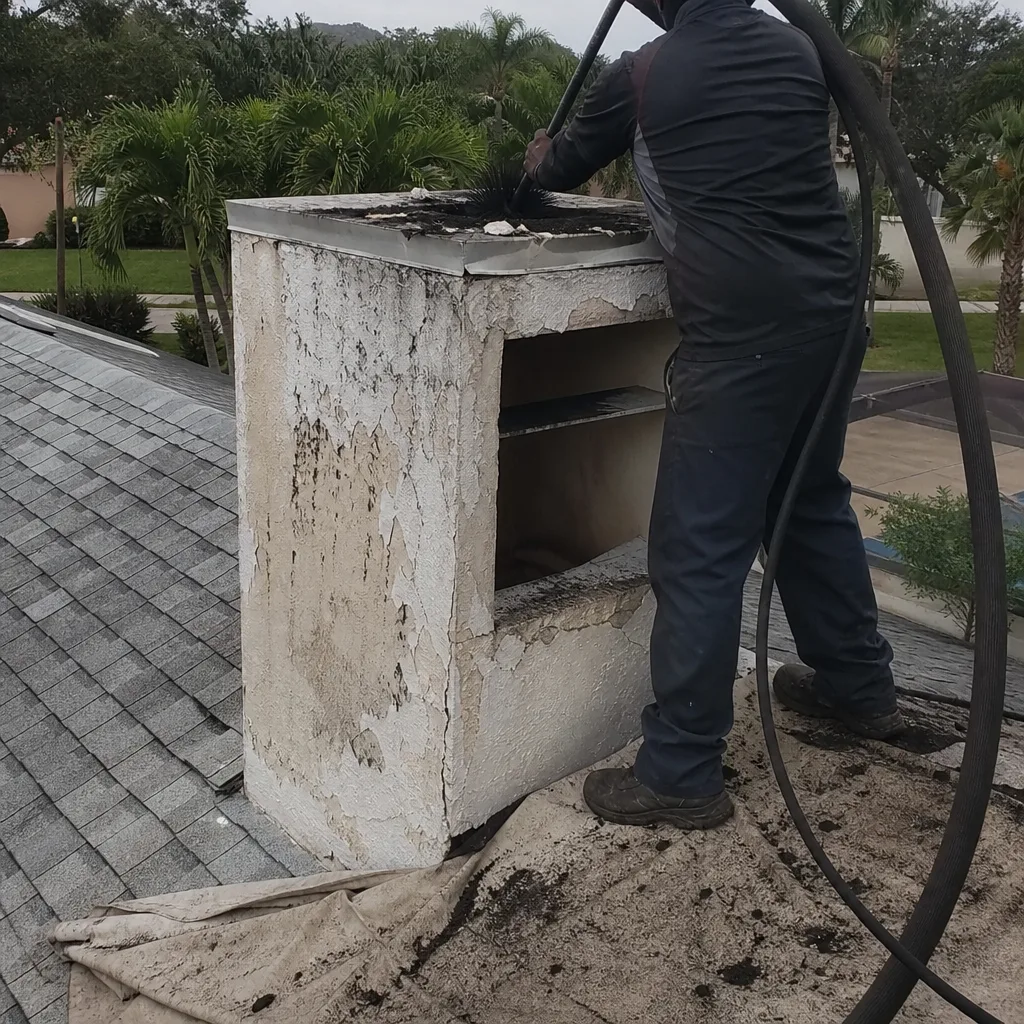 Before
 After
After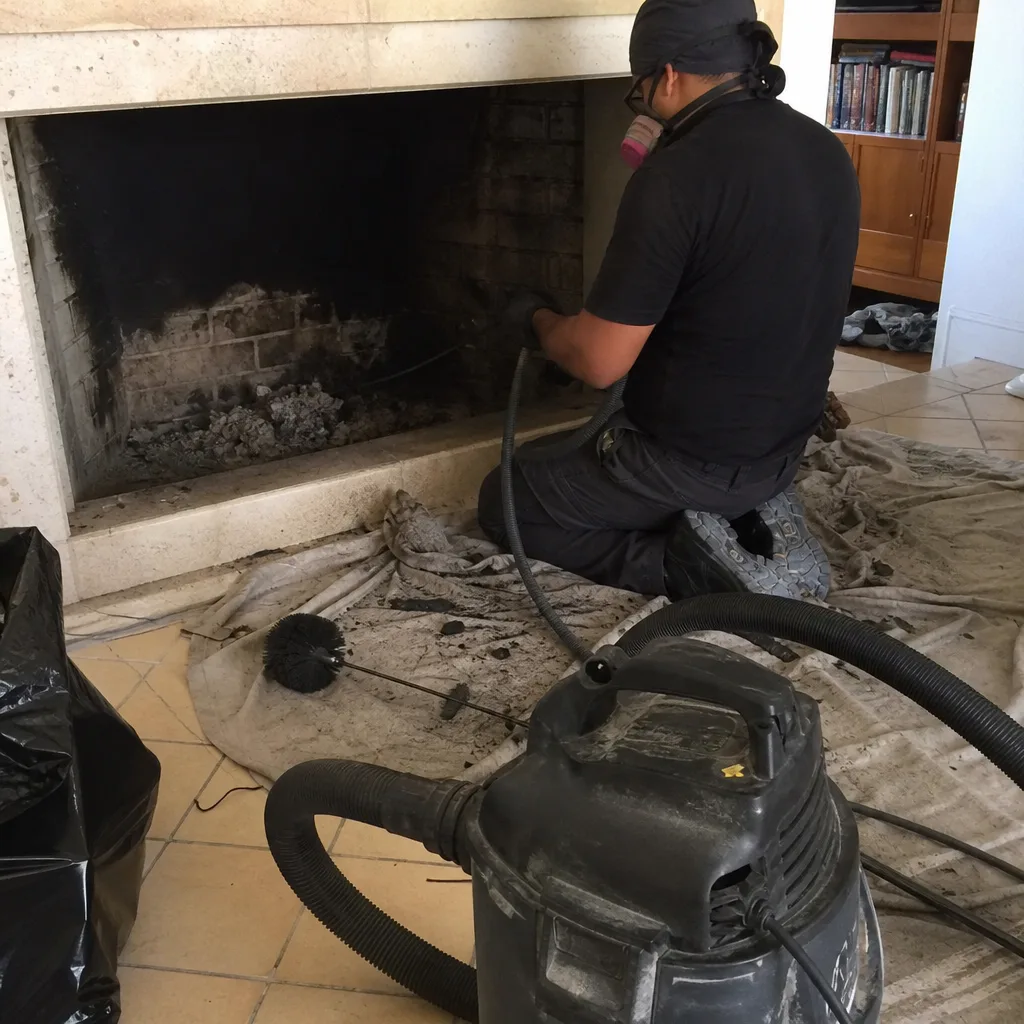 Before
 After
After